

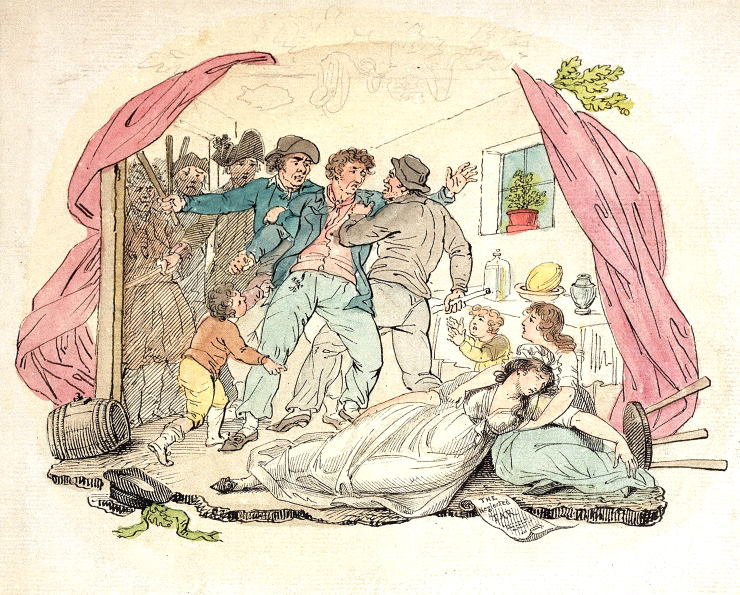
On 20th October 1803, John Collins the Rector of Oxwich witnessed a rarely recorded event in Gower’s history. An armed vessel came into the bay belonging to a privateer from Liverpool, alarming the residents. The next evening, a press gang came to Oxwich taking many residents on board the vessel against their will before sailing towards the west. It was actions such as these that made Press Gangs hated throughout Gower.
Impressment, colloquially the “press gang”, is a type of conscription of people into a military force via intimidation and physical coercion, conducted by an organized group. During the Age of Sail, the Navy, the Coastguard and even state-sanctioned privateers would send their crews into ports to find “eligible men of seafaring habits between the ages of 18 and 55 years”.
Throughout the feudal era, all men were expected to protect the realm when called upon. As such, impressment was a common practice in the armies and ships of mediaeval Europe. Ideas about individual liberty and the state’s restricted power started to emerge in England in the early 17th century, and by the time the Civil War broke out in 1642, the practice of impressment of soldiers had already been outlawed. However, the navy was deemed too valuable by Parliament to grant sailors the same privileges. The same conclusion was reached by succeeding administrations despite more upheavals and growing pressure from the public against impressment as a practice.
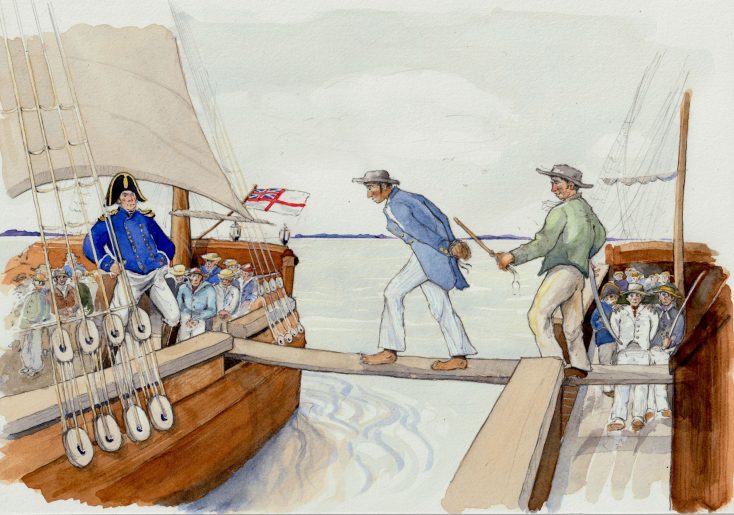
The importance of Britain’s fleet increased as it became a global power. The number of ships that needed to be manned increased dramatically as a result of the demands made on it to safeguard trade and the colonies. Despite the British public’s widespread belief in liberty, impressment persisted since all other options were unsuccessful. As a result, everyone detested the press, as it was frequently abbreviated. Even the authorities were hostile; the Admiralty believed the entire process was ineffective, local council members frequently refused to ratify press warrants, and juries and judges repeatedly cleared men on trial for murder because they had rightfully resisted press gangs’ invasion of their personal freedoms. In Gower, a cave near Llanmadoc that no longer exists named Nottle Tor was used by locals to hide from Press Gangs.
Despite the lack of support from the public, impressment endured until it was outlawed in 1815. During that time, the Coastguard also started to impress local sailors. Revenue Officers often had crews made up of impressed men. While this was a form of involuntary conscription, the impressed sailors were treated and paid as ordinary sailors but endured harsh conditions such as disease and the threat of severe punishment for disobedience or desertion.
Not only did impressed men live in life threatening environments but the process of conscription was often a violent process. There is a local legend from Pwll Duof a press gang of twelve men who unsuccessfully tried to impress John Voss of Nicholaston Hall and his neighbour John Smith in Oxwich. Voss and Smith violently resisted the press gang who were forced back to the ship Caesar. After this event, the Caesar set sail but terrible weather conditions in the Bristol Channel forced them to turn back. As Mumbles did not have a lighthouse at this time, the crew of the Caesar mistook Pwll Du Head for Mumbles Head. When the Caesar crashed into the rocks, the captain, the mate and some sailors were able to escape but did not alert anybody to the ship’s destruction. As such, the bodies of sixty-eight men were found abroad the wrecked Caesar the next morning. Most of these men were impressed sailors, conscripted on board against their wills. According to local legend, the area of the wreckage was named “Caesar’s Hole” and the sixty-eight impressed men were buried beneath Pwll Du Head in an area known as “Grave’s End”.
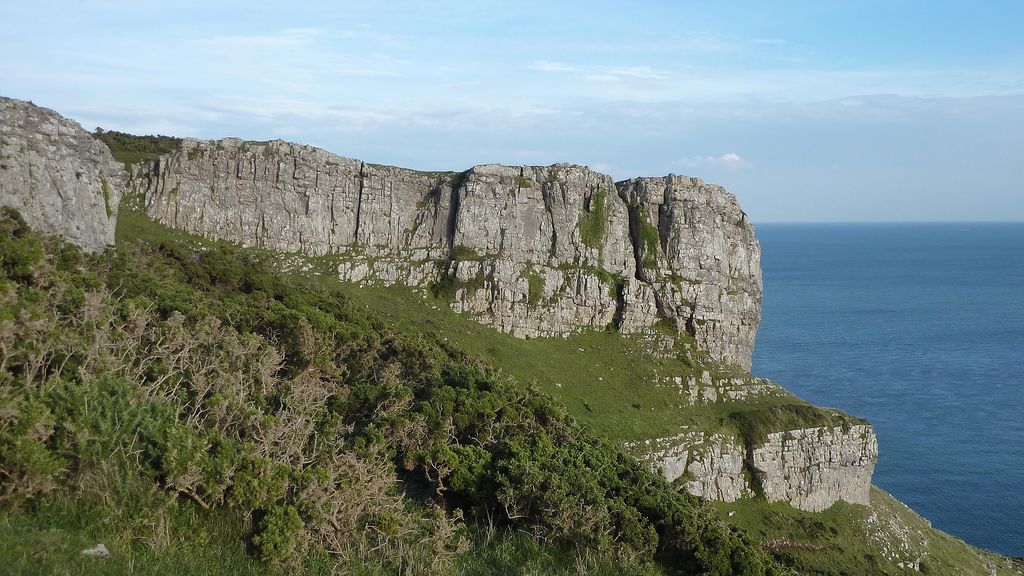
As this is a local legend in Gower, it is possible that C. D. Morgan could have been resighting a fictional story. There is no hard evidence of Caesar’s existence and its wreckage at Pwll Du has never been identified. The bodies of the sixty-eight impressed men have never been recovered and their existence is shrouded in mystery as no names were ever given. Even if this story is completely fictional, it demonstrates that the local communities in Gower feared impressment. According Heather Holt, there was game children played during her upbringing called “hiding from the press-men” which had been passed down orally for generations. This means that the legend has an enduring legacy in Pwll Du.
Further Reading
- Paul Ferris, Gower in history: myth, people, landscape (Hay on Wye: Armanaleg Books, 2009).
- Twm Elias and Dafydd Meirion, Smugglers in Wales (Llanrwst: Gwasg Carreg Gwalch, 2017).
- Richard Platt, Smuggling in the British Isles: A History, (Stroud: Tempus Publishing, Ltd., 2007).
- Nicholas Rogers, The Press Gang: Naval Impressment and Its Opponents in Georgian Britain (Continuum UK, 2007).
- John Collins, Daily Journals of John Collins, Rector of Oxwich from 1771-1814, (Swansea: Royal Institution of South Wales, 1835).
 Pirates of Port Eynon
Leave a comment