

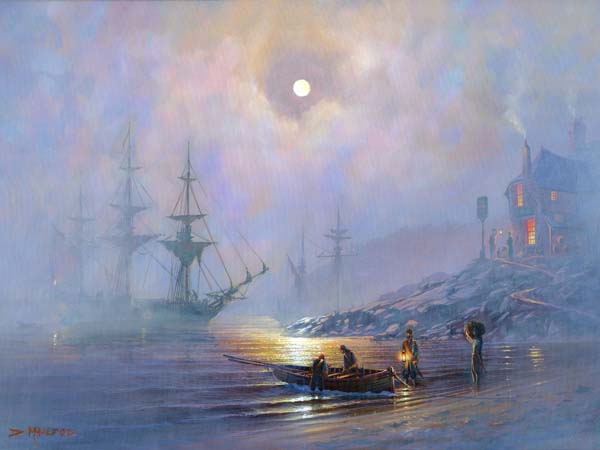
Smugglers depended on popular support from the local community. During the 18th century, many merchants in Gower either worked directly with smugglers or dealt in smuggled goods. Many taverns throughout Gower sold smuggled alcohol to patrons who turned a blind eye such as Beaufort Inn in Pwll Du where the landlord was said to have made a convenient arrangement with the local smugglers. Even the church was involved in smuggling. Not only did clergymen turn a blind eye to their activities and bought their brandy, but the goods were sometimes hidden in church buildings and cemeteries, especially in chest tombs.
This support for smugglers was not just a Gower phenomenon, but a prominent attitude amongst many coastal communities throughout Britain. For example, in 1743 John Wesley preached in Cornwall against smuggling, calling it “a detestable practice” and was pelted with eggs and stones. Farmers and their workers along the Gower coast would help to land the goods, supplying horses and carts for transportation and a safe store. These farmers were often rewarded with a portion of the contraband, not only for their help but also as a bribe to stay quiet. During his exploration of Gower, C. D. Morgan encountered many stories farmers trafficking prohibited articles. The only one Morgan recorded into his diary was about a farmer known as Mr. Webb, “a merry jovial old gent, who delighted in a little fun, and loved a joke dearly”.
According to Morgan, another old man named John Smith was invited by Mr. Webb to his farm house where they drank illicit Cognac smuggled into Gower from Geneva. Allegedly, the Cognac was so strong that John Smith, his wife and his maid went home and collapsed on the floor. Morgan claimed “for three days and three nights they lay there helpless”. Aside from this story, there does not seem to be any source of Mr. Webb’s existence. Local parish records do list a few Mr. Webbs that lived in Gower during the early 19th century when C. D. Morgan visited Gower, but without a first name or any other details, it is impossible to find out which Mr. Webb is one in question. As this was just a story Morgan had heard from the locals, it is possible that it is entirely fictional or the names of the person’s involved were changed to protect their identities. While Morgan’s account is flawed, it is just one tale of many throughout Gower showing their direct interaction with smugglers and smuggled goods. In other words, smuggling was a part of everyday life during the 18th and 19th centuries.
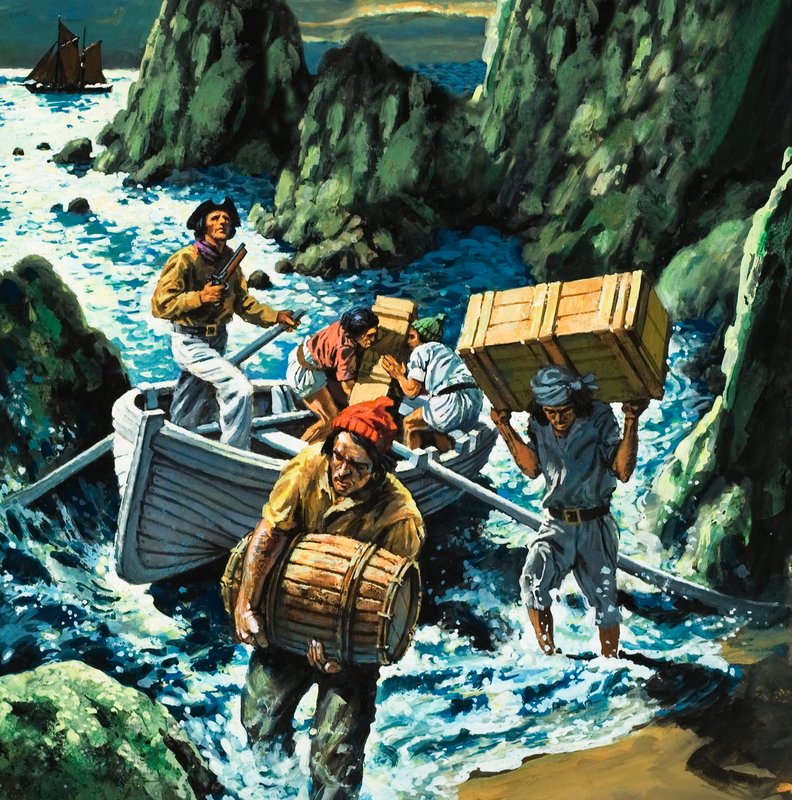
Smugglers in Gower also received support from the gentry. The Mansell family were known by the local community to directly assist smugglers in Rhossili. In the 14th century, the Mansel family established residences throughout the Gower peninsula, such as Oxwich and Penrice, and became powerful landowners in the region. Their influence peaked with Sir Rhys Mansel, who purchased Margam Abbey in the middle of the 16th Century. Not long after the Mansel family purchased Margam Abby, they were involved in a violent episode. In 1557, a storm blew a French merchant vessel on to the rocks at Oxwich Point. As England was at war with France, the ship was looted and the French sailors were locked up. The Mansel family benefitted greatly from this episode, taking cargo of raisins, figs, almonds, wool and a few of the ship’s timbers and fittings. The Mansel family did not only turn a blind eye to wrecking, they directly benefitted from it.
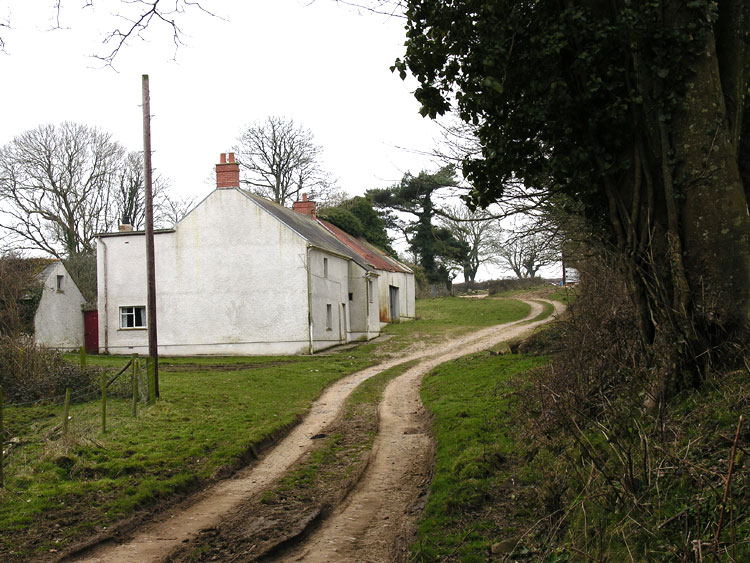
According to local sources, there is a two-mile tunnel from Rhossili Bay to an old farmhouse owned by the Mansell family called Old Henllys. During the early 18th Century, Old Henllys was owned by Edward Mansel, an unpopular character known colloquially as “the Captain”. He gained a reputation for smuggling and even piracy. Edward is featured in a tale known as the “ghost chariot” or “spectre chariot”, in which he is driving desperately across Rhossili sands. Locals believe he had raided a Spanish galleon and stole a lot of silver which he hid back at Old Henllys. At Old Henllys, Edward kept bloodhounds to deter trespassers and trained a large boar to attack anyone who used the nearby footpath. Locals believed he did this to keep people away from contraband that had been smuggled from Rhossili Bay. While the Mansel’s tunnel has never been found, local legends about the Mansell family persisted.
While these stories could be entirely fictional, they show that landowners in Gower benefitted from the revenue that smugglers brought into the community. Locally powerful and influential families such as the Mansels, the Lucases, the Eynons, the Arthurs and the Stotes were all linked to the smuggling trade in some way. The number of legends surrounding these families demonstrated not only the public support of smuggling but also that the activity was normalised throughout the communities of Gower.
Further Reading
- Twm Elias and Dafydd Meirion, Smugglers in Wales (Llanrwst: Gwasg Carreg Gwalch, 2017).
- K. C. Watkins, Welsh Smugglers, (Cornwall: James Pike Ltd, 1975).
- Paul Ferris, Gower in history: myth, people, landscape (Hay on Wye: Armanaleg Books, 2009).
- H. M. Tucker, My Gower, (Shrewsbury: Rowlands & Company, 1957).
- Michael Gibbs, “Brandy for Parsons,” Gower, vol.24 (1973) pp.44-50.
- C. D. Morgan, Wanderings in Gower: A Perfect Guide to the Tourist, with All the Lays, Legends and Customs, and Glossary of Thye Dialect, (Swansea: printed at ‘The Cambrian’ office, 1886).
- Richard Platt, Smuggling in the British Isles: A History, (Stroud: Tempus Publishing, Ltd., 2007).
 Pirates of Port Eynon
Leave a comment