

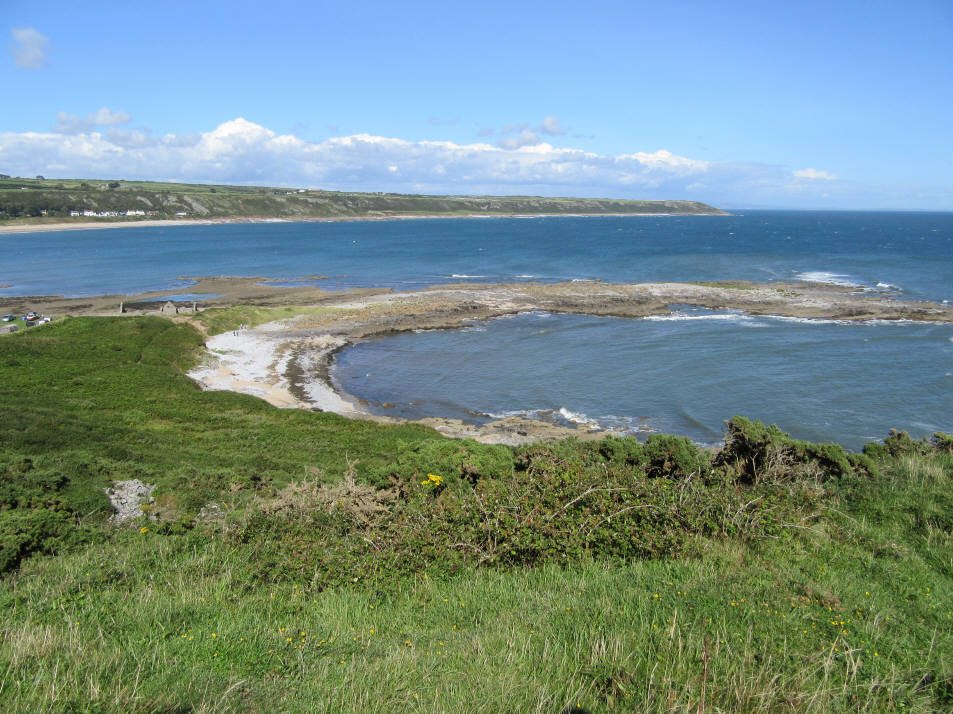
The Lucas family are mostly remembered for romanticised legends of smuggling and piracy. While they have become most notorious family in Gower known for smuggling, much of their story has become folklore which developed since the 18th Century from the pages of Archaeologia Cambrensis to pamphlets located in tourist shops throughout the Gower.
“… he secured ye pirates and ye French smugglers and rifled ye wrecked ships and forced mariners to serve him” – Lucas Annotation no.1, circa 1830
Tales of John Lucas, pirate, smuggler and outlaw, and his various descendants have been handed down through generations of Gower folklore, but are their stories true? Or, are they just rumours and hearsay that have developed into glamorised legends?
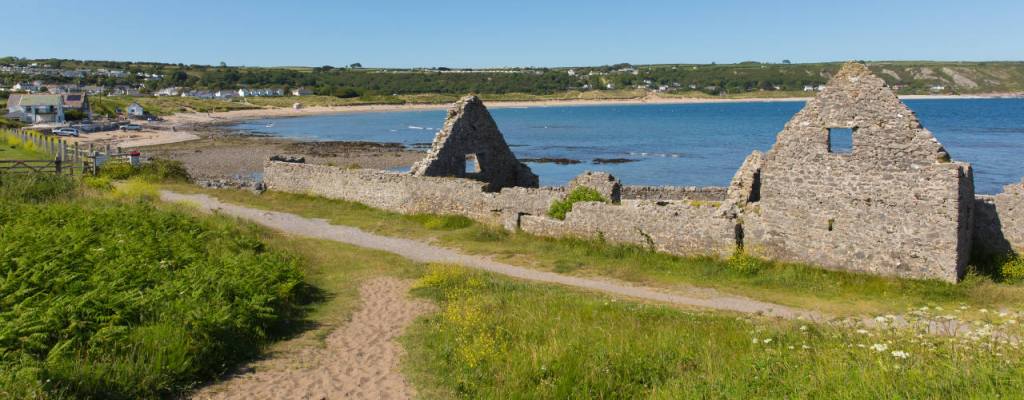
John Lucas was likely born around 1510, the eldest son of David Lucas of Reynoldston. He was given Salt House in Port Eynon which seven generations of Lucases lived before it was destroyed in a storm. He fortified Salt House and used it as a headquarters for his illegal activities. Lucas proceeded to start a partnership with two other men from the area, George Eynon and Robert Scurlage, and together they controlled the smuggling gangs that worked along the Gower Coast and became known as ‘the Pirates of Port Eynon’. John Lucas garnered the reputation as some kind of Robin Hood character, as the whole of Gower took advantage of the illegal contraband that he brought ashore in Port Eynon. Smugglers were often generous to the local population in order to ensure their co-operation.
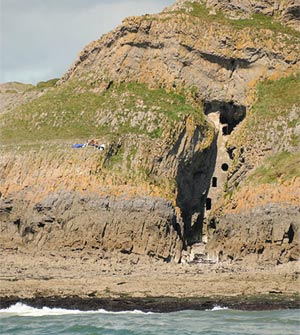
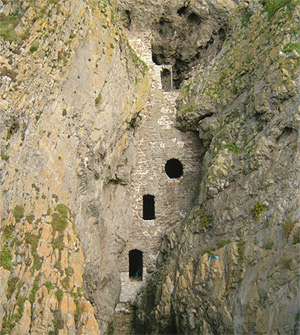
At the far end of Port Eynon is the location of Kulverd Hole or Culver’s Hole, a cove surrounded by a sixty-foot wall with lookout slits. John Lucas fortified this area and used it to store arms and hide contraband. Some sources claim there was a secret tunnel that connected to Salt House, but this tunnel has never been discovered so could just be hearsay or a local legend. John Lucas would remove his fortifications from Salt House and Culver’s Hole later in life as he gave up smuggling.
He was followed in the smuggling trade by numerous members of his family. A ship belonging to one of his descendants, also named John Lucas, got into difficulties on the Nash Sands, but before he had time to unload his illegal goods, another band of smugglers, accompanied by wreckers, emptied the ship. Lucas rushed off to the house of a local squire who was the leader of this particular group and demanded that his goods be returned. Not only did he persuade the squire to release his contraband but also found himself a wife, the squire’s daughter.

According to legends, the last John Lucas associated with smuggling died of fright in 1803, as he witnessed Salt House being destroyed in a huge storm. It was said that the cellars of Salt House were so big that you could drive a horse and cart down them. Also, that the final cargo of wines and silk from France was no never distributed before the death of the last John Lucas. If this is true, then the illegal contraband would still be in the cellars but they have never been discovered, with many people searching for them and countless excavations of the area.
Salt House allegedly was linked to the old family home Stouthall via an undiscovered tunnel. Once again, nothing has been found at Stouthall to indicate these tunnels are not a myth. Moreover, Stouthall is remarkable for how unremarkable it is for the home of an infamous smuggling family.
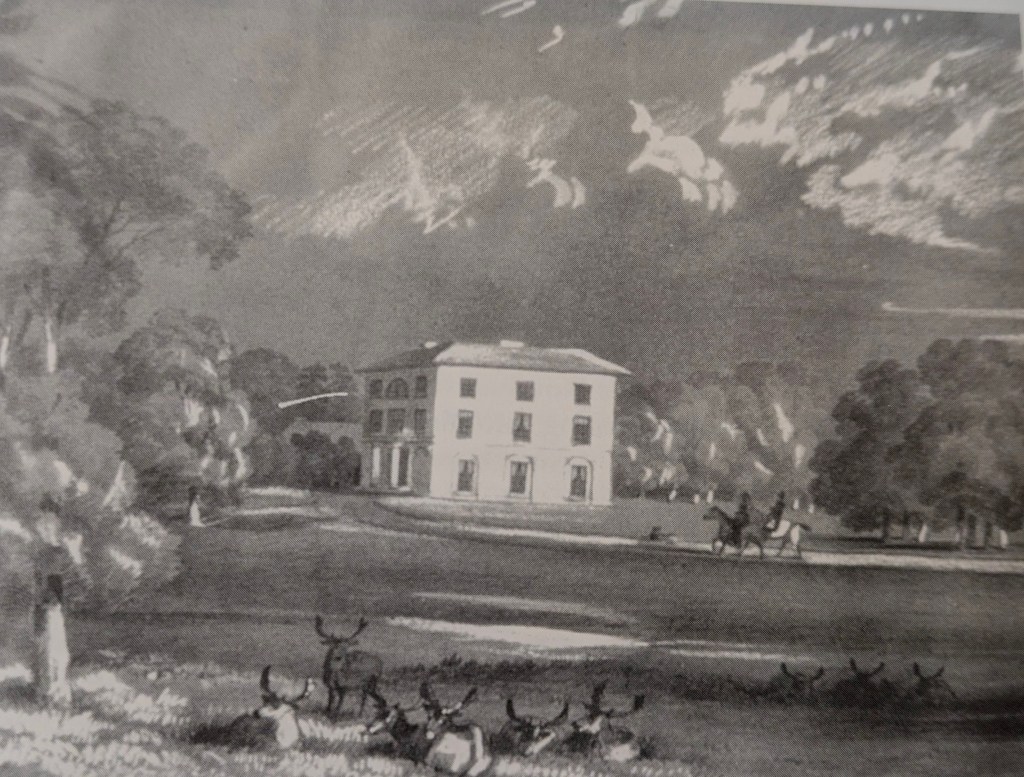
While Stouthall is unremarkable, one of the family’s other houses was the Great House at Horton had some interesting additions that allude to the Lucases smuggling heritage. In 1986, when the owner was undertaking renovation work, he found loopholes for muskets in the wall. It is also alleged that the staircase was made of timber from a ship that was wrecked off Gower’s coast.
While these aspects of the Great House are interesting and might suggest their involvement in the smuggling trade, it is not any indication the Lucas clan conducted actions of piracy. While many of the Lucases openly contributed to the smuggling of illegal contraband into Gower, there is a question about whether the Lucas clan had resorted to piracy.
Nearly all the information on the Lucas Family from the 15th Century to 1826 can be traced back to a single source, a document known as the Lucas Annotation no.1. It purported to be a commentary on the pedigree and family tree of Port Eynon’s branch of the Lucas family. The Annotation was compiled by Reverend Dr. J. H. Spry during the 1830s in connection with a family lawsuit over ownership of property. While at first few people questioned the authenticity of the Annotation, overtime it came under more scrutiny.
Robert Lucas, a solicitor by profession and descendent of the Lucas Family, returned from England to Gower in the 1970s and began researching his family’s history. As chairman of the Gower Society, he contributed many articles about his family’s heritage. At first, he took the Annotation seriously, but overtime, Robert Lucas realised the genealogy did not fit and had doubts over the pirates of Port Eynon’s existence.
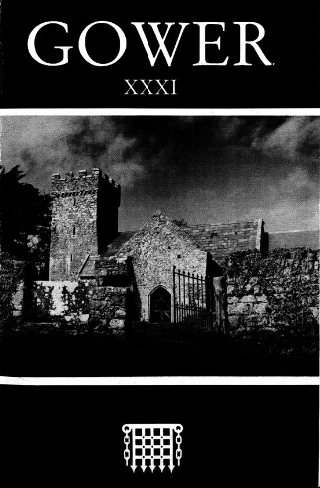
Michael Gibbs found evidence that John Lucas might not have owned Salt House, instead it was occupied by a Mrs. Gribble and the building was merely a place where sea-water was evaporated for its salt. Robert Lucas wrote, “… the Salthouse story is a work of fiction” and went onto conclude “… while John may have consorted with pirates it is much more probable that he was, like the other Lucases of those times, no more than a busy farmer”.
Robert Lucas’s reappraisal dismissed the Annotation as a hoax that was likely created by Reverend William Lucas Collins, a clergyman that resided in Gower. Reagardless, the ‘pirates of Port Eynon’ had already infiltrated Gower folklore and been immortalised in books, pamphlets and websites.
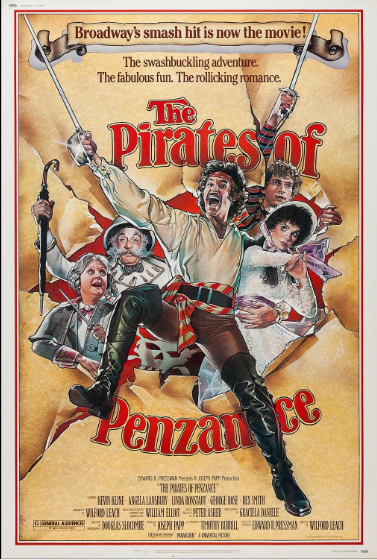
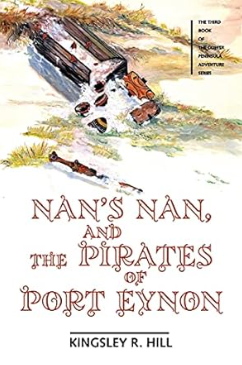
The stories of the Lucas Family have even influenced works of fiction. Apparently, the composers Gilbert and Sullivan based their opera The Pirates of Penzance, on John Lucas and his alleged connection with smuggling goods on the Cornish coast, near Penzance. The Lucas Family’s folklore also appeared in Kingsley Ross Hill’s novel Nan’s Nan and the Pirates of Port Eynon which is a part of his award-winning Gower Peninsula Series. While the legends surrounding the Lucas Family might be far from reality, nothing beats a satisfactory myth.
Further Reading
- T. Elias and Dafydd Meirion, Smugglers of Wales, (Llanrwst: Gwasg Carreg Gwalch, 2017).
- K. Watkins, Welsh Smugglers, (Cornwall: James Pike Ltd, 1975).
- P. Ferris, Gower in History: Myth, People, Landscape, (Hay on Wye: Armanaleg Books, 2009).
- R. Lucas, Supplement to a Gower Family, (Lewes: Book Guild Limited, 1986).
- R. Lucas, “The Pirates of Port Eynon,” Gower, vol.31 (1980) pp.11-22.
- D. Rees, A Gower Anthology, (Swansea: Christopher Davies, 1977).
- J. D. Davies, West Gower, 4 vols. (Cambrian Press, 1877).
- K. R. Hill, Nan’s Nan and the Pirates of Port Eynon, (Swansea: King of the Castle Publishing, 2021).
 Pirates of Port Eynon
Leave a comment