

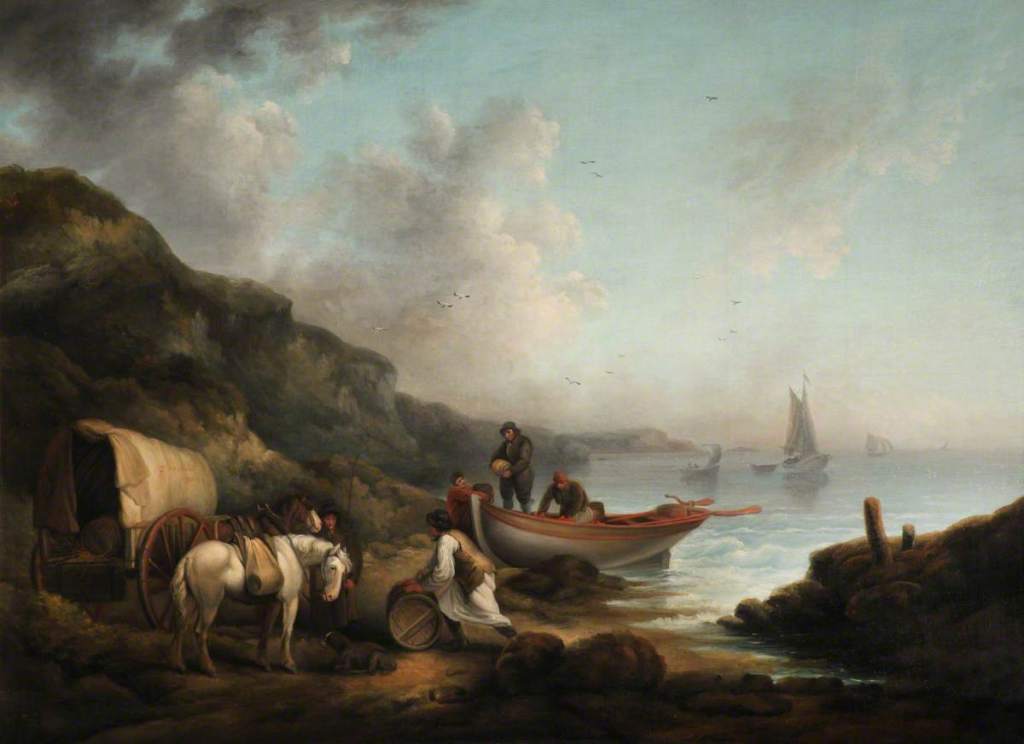
During the early modern period, smuggling was one of the most organised and widespread criminal activities in Wales. Despite this, smuggling remains an understudied aspect of crime and justice in the eighteenth-century. James Sharpe argued that “little serious research on smuggling has been done” and this is reflected in the literature on the subject. Beyond this, the public itself is rarely educated on this rich subject.
“Wherever there may be a sea, there are pirates in it” – An ancient Greek Proverb.
The story of sea related crimes in South Wales predated the heyday of smuggling in the 1700s by centuries. In 2002, workmen digging the foundations for an arts centre on the banks of the Usk in Newport discovered the remains of a 15th Century ship. Experts claimed it was possibly a Portuguese ship that had been captured by pirates. They suggested these pirates could have been under the command of the Earl of Warwick (1428-1471), who owned vast tracts of land in Newport. Two centuries earlier, there is a record of a Genoese ship being captured off Tenby by a gang of pirates who smuggled the goods, which included two barrels of gold, onto land.
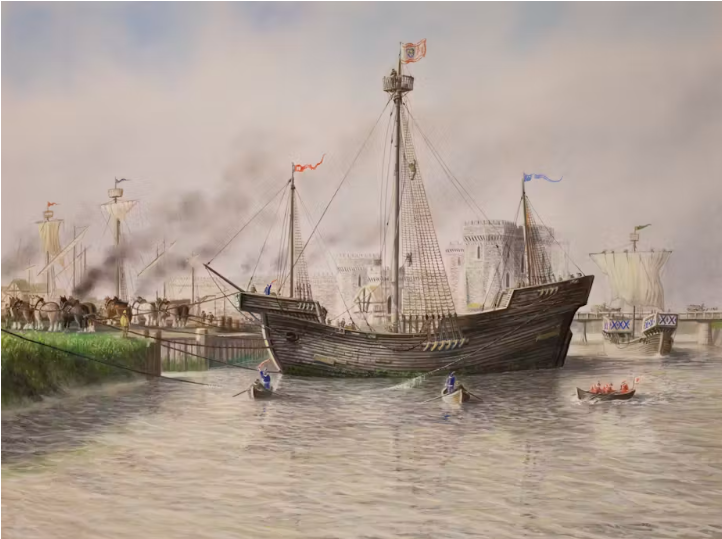
In 1556, the inhabitants of South Wales had implored Elizabeth I to help them stop pirate attacks and curb the smuggling of illicit goods onto land. She issued a proclamation that every captured pirate or smuggler was to be hanged on the cliffs above the sea as a lesson and a warning. It would seem like this proclamation made little difference as in 1578 a ship from the English navy was sent to South Wales to capture pirates attacking ships in the Bristol Channel. The ship, known as the Flying Hart, was itself attacked by pirates off the coast of Newport.
By the middle of the 16th Century, Tenby had become a hotbed of pirate activity. In the 1530s, around 15 pirates, including Captain John du Laerquerec, were caught when they came ashore for supplies. The rest of the crew witnessed their capture and sent three boats full of armed men to try rescue them. They ultimately failed and all of them stood trial for piracy. In 1546, pirates under the command of Richard Vaughan captured the Spanish ship, Sancta Maria de Leusa, smuggled the cargo ashore and sold it in the county. In 1555, pirates captured a Breton ship and brought it into Tenby Bay, but were arrested by Sir John Wogan, Sheriff of Pembrokeshire. Rather than return the cargo to its owner, Wogan took the goods and sold them. The Breton owner, John le Barthicke, brought Wogan to the Privy Council in London where the sheriff of Pembrokeshire had to pay compensation.
Caldey Island was also a stronghold for pirates and smugglers. The Crown Records of 1562 state that smugglers received sheep and other goods “sometimes without leave of the owners”. It added that Fishguard was “a great resort and succour of all pirates…” It has been claimed that pirates often stole and ate horses which the inhabitants of Caldey used to till the land instead of oxen.
Piracy would remain common along the South Wales coast into the 17th Century. Sir Thomas Button of Dyffryn was appointed Admiral of the King’s Navy on the seas between Wales and Ireland and spent a number of years chasing pirates. During this period, pirates from France, Spain and Turkey attacked ships sailing along the South Wales coast, often seeking refuge off the Penarth headland.
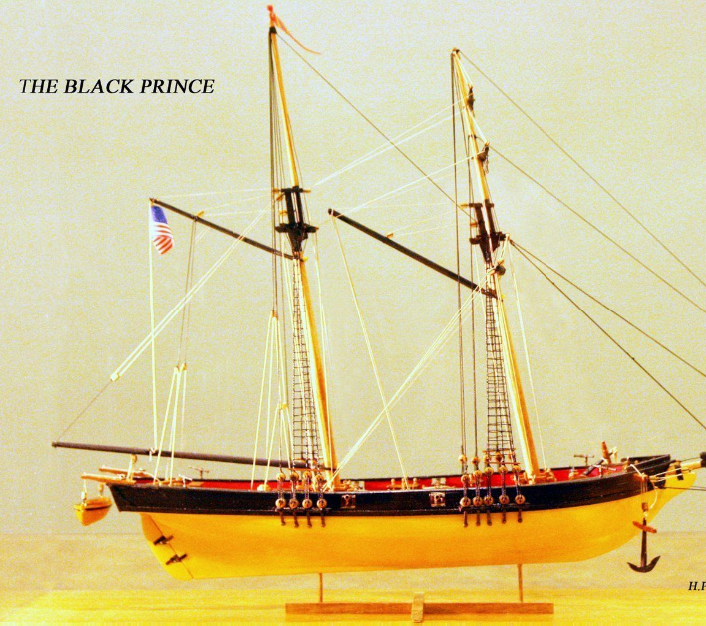
On occasion, pirates would also threaten ports along the coast. In one instance, pirates threatened to attack Fishguard in 1779. The crew of the American privateer, Black Prince, captured a local ship outside the harbour and threatened to fire on the town unless a ransom of £1000 was paid by the locals. The inhabitants of Fishguard refused and so the pirates fired their cannon towards the town, hitting a number of buildings. The marks that the shot left could be seen on the wall of one hotel until the 20th Century. An armed ship crewed by a gang of smugglers fired on the pirate ship, forcing it to leave the area. After this incident, eight cannons were placed in the fort to protect Fishguard.
“The country is filled with energetic and enterprising men, rendered desperate by being reduced from affluence to poverty through the vicissitudes of the times. They will give an impulse to smuggling unknown to the country heretofore” – John C. Calhoun.
While piracy along the Welsh coast began to decrease in frequency throughout the 18th Century, Smuggling remained a prominent crime. During this period, smuggling was one of the most organised and widespread criminal activities in Wales and the rest of the British Isles. Often many people engaged in the activity from various locations, moving a variety of goods throughout Wales. Gower was a particular hotbed for smugglers, with Lucas Family of Port Eynon being especially known for this trade on the peninsula. There were many isolated creeks, caves and beaches on the peninsula, and being located next to Swansea, one of Wales’ primary ports, it became a crucial location for smugglers in South Wales.
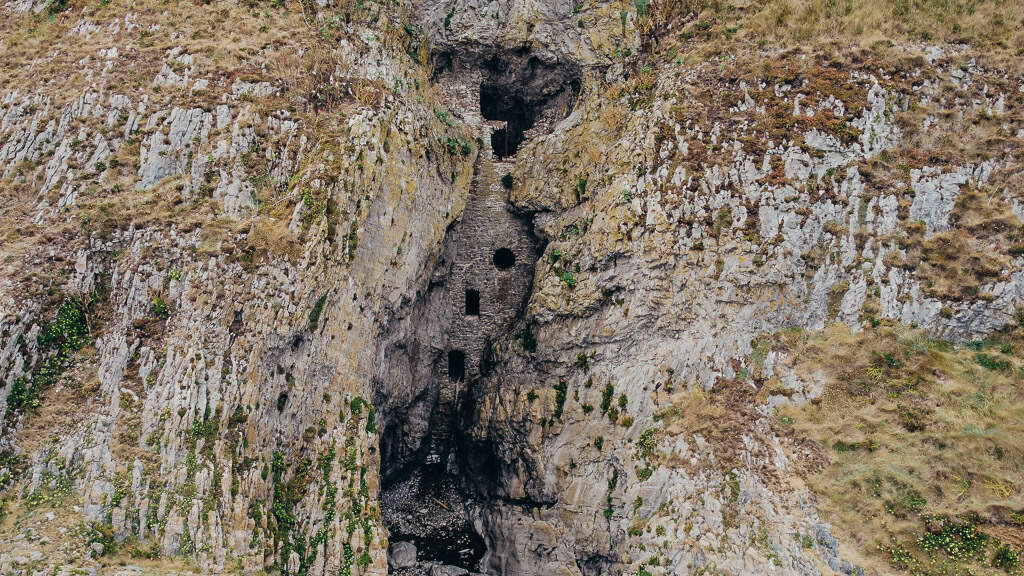
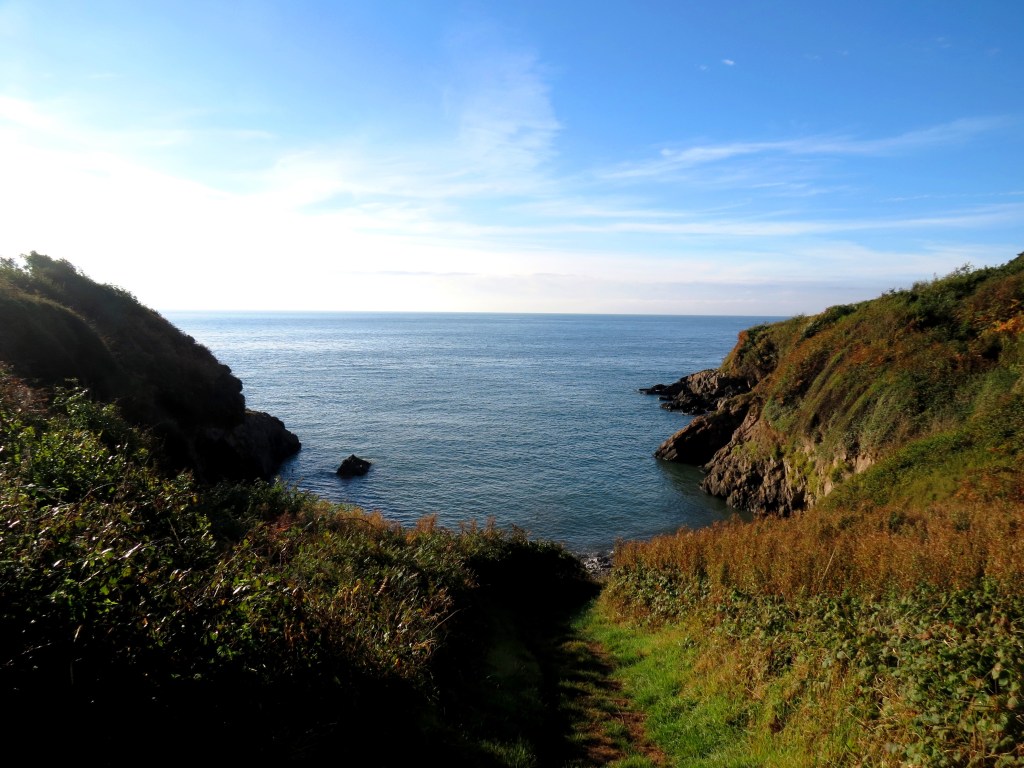
Brandy Cove on the southern coast of Gower was frequently used by smugglers. As this bay was sheltered, transport inland was virtually invisible through the wooded Bishopston valley. Above the valley, farms such as Highway were used as staging posts by smugglers like William Arthur of Great Highway Farm and John Griffiths of Little Highway Farm. The entrance to an old lead mine by the beach was blown up by revenue officers to prevent smugglers hiding contraband in the shaft before transporting it to local farms.
The revenue officers complained that they lacked the resources to tackle smuggling. According to a 1730 report, “The smugglers are grown very insolent and obstruct our officers in execution of their duty … the master and the mariners of the ship Galloway … came up on deck with pistols and drawn cutlasses and refused them to rummage.” One method the smugglers had of preventing the chief customs officer in Swansea from discovering their contraband was making sure he was called up for jury service in the local court on the day they were unloading in the harbour. As he was otherwise engaged, it was easier for smugglers to complete their business unevaded. This is a clear indication that smuggling was supported in the local community, even by those in the amongst the higher echelons of society.
Throughout the 1780s and 1790s, there were several instances along the South Wales coast of revenue ships being wrecked and revenue officers injured. The area around Swansea was particularly infamous for brutal clashes between revenue officers and smugglers. In January 1788, revenue officers searching for a notorious smuggler came across 50 men with “iron bars, pokers, large knives, whips and other weapons.” As the revenue officers were completely outmanned, they could not serve a warrant on the smugglers and had to request military assistance. Despite being peacetime, the reply from the War Office was “the condition of the forces at this time is such that it was not possible to send troops to South Wales.”
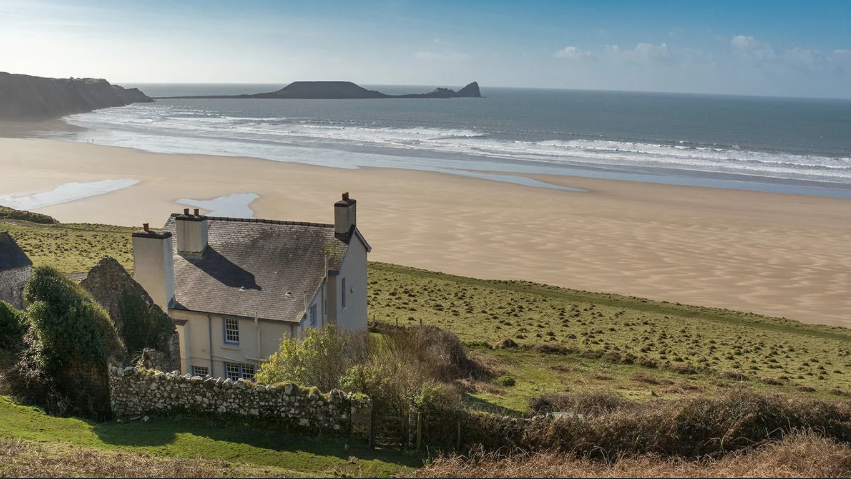
The revenue officers continued to be outsmarted by smugglers who resorted to new and creative ways to hide their contraband. A hiding place was found in the bed of a small river behind the Old Rectory in Rhosilli, Gower. The only way of accessing it was to change the course of the river itself. Even if the revenue officers were successful in seizing illegal contraband, it was difficult to transport them safely to a customs house. In April 1803, a revenue officer named Frankie Bevan seized over 400 four-gallon casks of whiskey in Pennard in Gower. They were loaded onto wagons and escorted to Swansea, but during the journey, around 200 drunk men and women began harassing the officers. While the convoy was accompanied by up to fifty members of the local militia to ensure its safety, not all the casks of whiskey made it to the final destination.
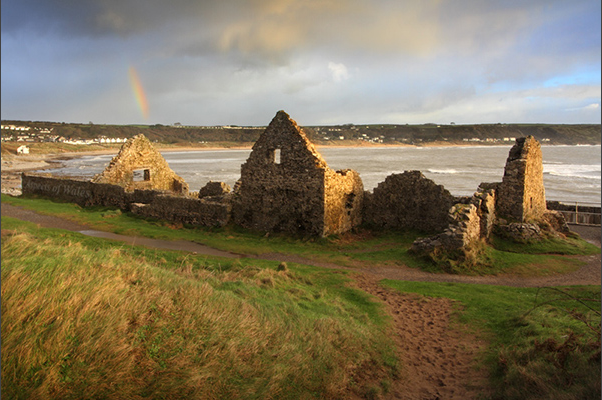
Clearly, there is much history hidden beneath the sands of the Welsh coasts ready to be uncovered.
Further Reading
- Sharpe, Crime in Early Modern England 1550–1750. 2nd ed. (London & New York: Longman,
1999). - Jones & Stone, eds., The World of the Newport Medieval Ship : Trade, Politics and Shipping in the Mid-Fifteenth Century (Cardiff: University of Wales Press, 2018).
- Meirion, Welsh Pirates (Talybont: Y Lolfa, 2006).
- Breverton, The Book of Welsh Pirates and Buccaneers (Sain Tathan, Bro Morgannwg: Wales Books, Glyndŵr Publishing, 2003).
- Snyder, ‘The Politics of Piracy: Pirates, Privateers, And The Government Of Elizabeth I, 1558-1588,’ A Thesis Submitted the University of North Carolina Wilmington, (2006).
- Carradice, ‘Pirates of the Pembrokeshire Coast’, BBC Wales History, (2011) available at: https://www.bbc.co.uk/blogs/waleshistory/2011/07/pirates_of_the_pembrokeshire_coast.html
- Phillipps & Owen, Pedigree of Wogan of Bouleston, Co. Pembroke (from George Owen’s MSS, at Middle Hill, No. 12380, in 1860) (Oxford: Middle Hill Press, c.1867).
- “Charles I – volume 196: July 1-19, 1631”. Calendar of State Papers Domestic: Charles I, 1631-3. Ed. John Bruce (London, 1862), British History Online, (2025) https://www.british-history.ac.uk/cal-state-papers/domestic/chas1/1631-3/ pp.97-114.
- Clark, Ben Franklin’s Privateers: A Naval Epic of the American Revolution, (Louisiana: Louisiana State University Press, 1956).
- Elias & Meirion, Smugglers of Wales (Llanrwst: Gwasg Carreg Gwalch, 2017).
- Watkins, Welsh Smugglers, (Cardiff: Viewing Wales Series, 1975).
- Hawkes, “Illicit trading in Wales in the eighteenth century,” Maritime Wales, 10 (1986): pp.89-107.
- Jones, History of the Port of Swansea, (Carmarthen: W. Spurrell & Son, 1922).
- Ferris, Gower in history: myth, people, landscape (Hay on Wye: Armanaleg Books, 2009).
 Pirates of Port Eynon
Leave a comment